
Research Point:
I need to source a range of images in which illustrators have created a sense of us and them or ‘otherness’. I will read the images and identify how I think they have done this. I will think about how they could have represented the subject differently, to avoid creating such a distance between them and the subject. I will write a brief summary of my thoughts.

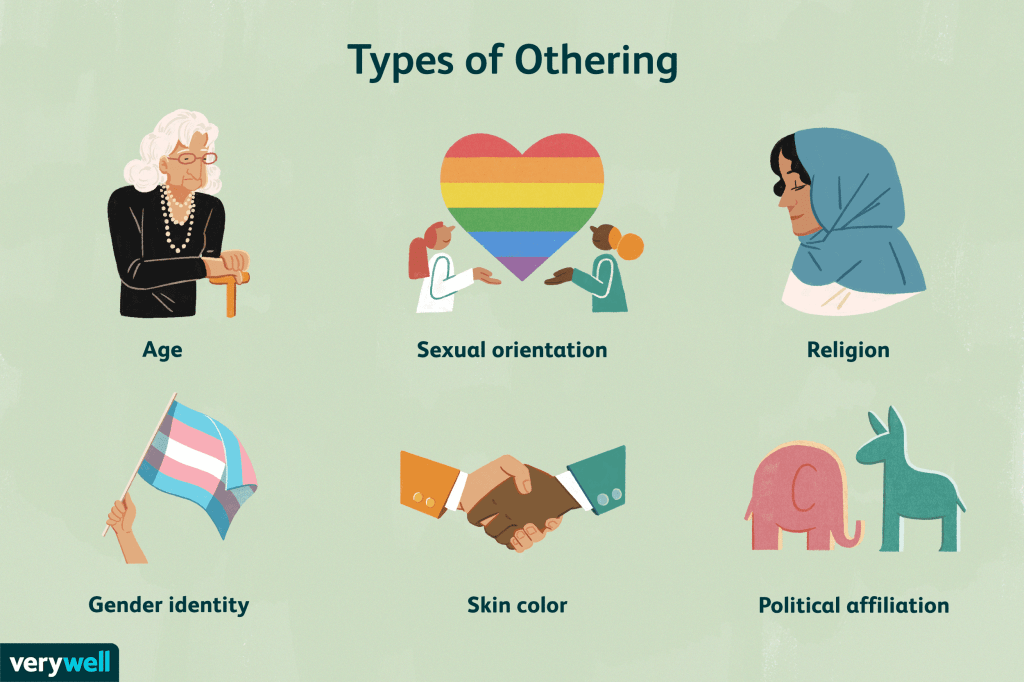
For this research task, I decided to focus on race as this is the largest example of ‘otherness’ and there are more illustrations showing this. Even though racism is still prevalent in today’s world, there are other forms of ‘otherness’ becoming more widely integrated into the statistics like gender identity and sexual orientation.


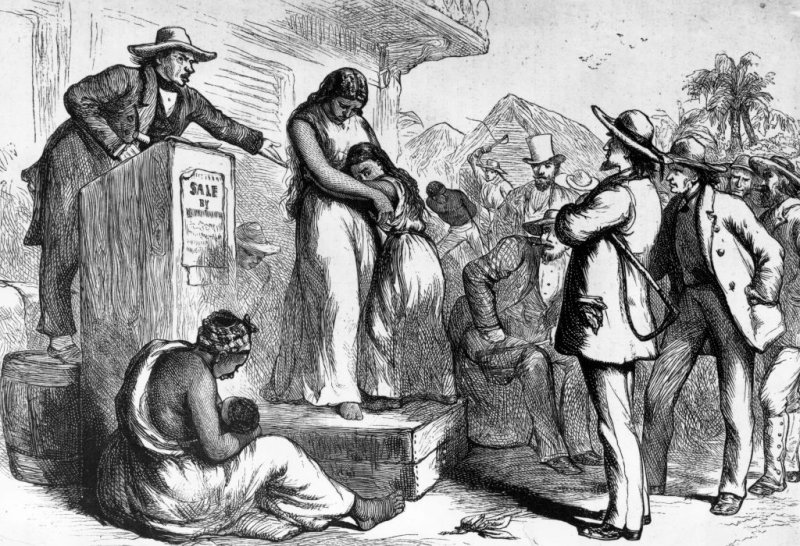
I think that all of these illustrations show a disgusting amount of racism, through the use of exaggerated facial features and stereotypes. They always make the other races look horrible and evil in comparison to the whites. In the first two illustrations, it depicts Asians with one long plat of hair, tunics, and geta footwear, and the third illustration shows the black woman as a maid/servant (this was very stereotypical and was even shown in the children’s cartoon ‘Tom and Jerry’), the fourth and fifth images show a ‘proper’ definition of slaves, wearing rags and chains. You already know that these illustrations have been created by white people as they are biased – when I say this I am not being racist myself, just expressing frustration over the white people of that era and the judgments/choices they made. I know it wouldn’t have been possible at that time but theoretically, the illustrators of these drawings could have avoided creating such a distance between them and the subject by changing the depiction of the other races and showing an equal presence between the races including the whites instead of giving the whites a depiction of power, authority, domination and force up on their horses wielding their canes and whips whilst the (I say this in quotes!) ‘inferior’ races are left defenseless.
Exercise 1: There and back again:
For this exercise, I need to go on a journey and document the experience using my sketchbook. Even though the workbook says that I can produce at least 3 drawings, I will produce more showing the significant steps on my journey.
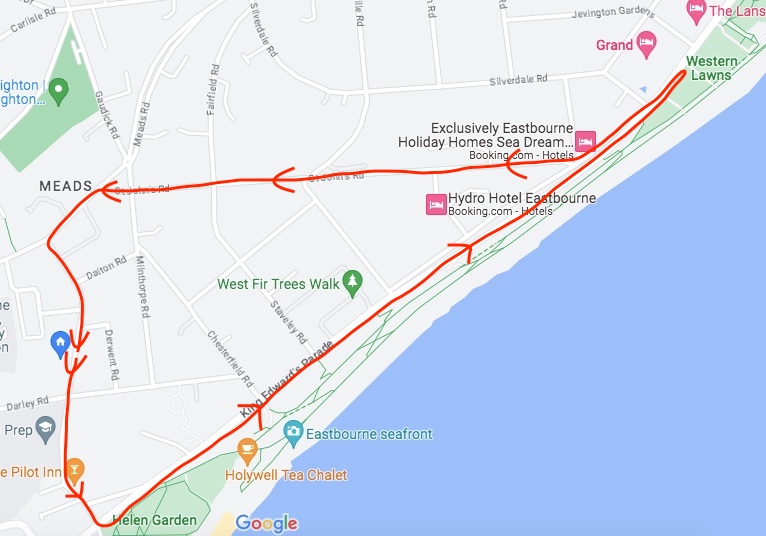
I decided to go for a walk along a part of the Eastbourne Promenade and view the Eastbourne Wheel for this exercise. I have shown a map of the journey below.
Eastbourne Wheel:
https://www.eastbournewheel.com/
Map:
Leaving Home:

Walking:

Destination:

Walking:
Coming Home:

Evaluation:
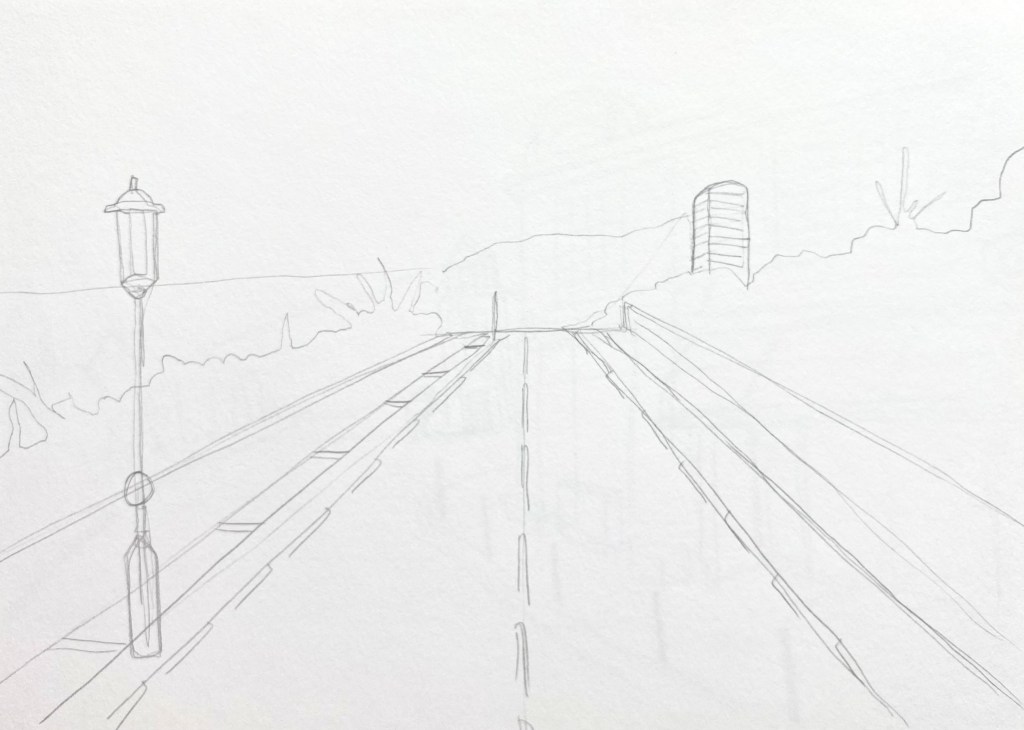
As I was doing reportage illustration outside on a walk I thought about what technique I could use in order to get as much information on the paper as possible in a short time, so for this, I chose continuous line drawing. Continuous line drawing gave me the freedom to draw from live references without any barriers with medium or time. I had to get over my perfectionism when using this technique so I think this exercise also allowed me to step outside my comfort zone in order to create a different style of illustration. I used only a pencil and my sketchbook as I wanted to focus on the objects/shapes, not the colour.
References:
Types of Othering – https://www.verywellmind.com/what-is-othering-5084425
America’s Anti-Chinese Bigotry has a very old stench – https://www.zocalopublicsquare.org/2021/02/25/anti-chinese-bigotry-olfactory-racism/ideas/essay/
Racism in the United States – https://en.wikipedia.org/wiki/Racism_in_the_United_States
When Slaveowners Got Reparations – https://www.nytimes.com/2019/04/16/opinion/when-slaveowners-got-reparations.html
‘The Slaves Dread New Year’s Day the Worst’: The Grim History of January 1 – https://time.com/5750833/new-years-day-slavery-history/
 OCA Learning Log